
Loading...
Serving Midland, TX and surrounding areas. (432) 289-7587
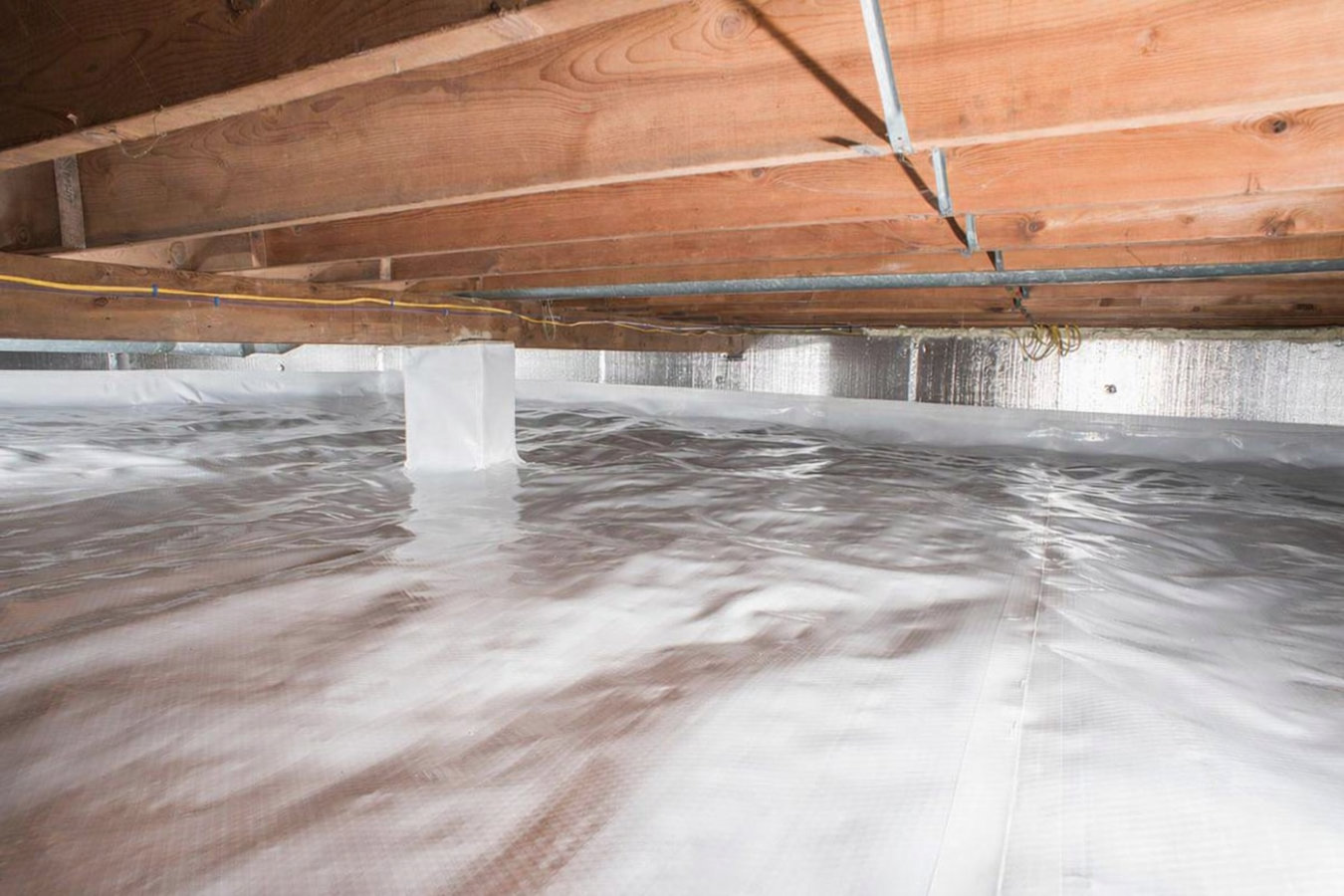
Midland soil never stops pushing moisture upward. A properly sealed vapor barrier stops it before it reaches your floors, your air conditioner, and your energy bill.
A crawl space vapor barrier in Midland, TX is a heavy plastic sheet laid across the bare ground under your home to block soil moisture from rising into your floor structure - most installations take one to two days and you stay in your home throughout. The sheeting covers the full ground surface, overlaps at the seams with sealed tape, and runs up the foundation walls so moisture has nowhere to enter.
For Midland homeowners, the problem is straightforward. The soil under your home never fully dries out - especially after Midland's intense summer storms - and that moisture evaporates upward continuously. Without a barrier, it reaches your floor joists and beams, where it can slowly cause wood to soften, mold to grow, and energy costs to climb. Many homeowners notice the issue first as a musty smell after a rain event or a cooling bill that seems too high.
A vapor barrier works well on its own and pairs naturally with crawl space insulation for homes that want to address both moisture and temperature in the same project. For homes with persistent humidity or wood damage already present, your contractor may also discuss full vapor barrier installation that includes wall lining and additional sealing along the foundation perimeter.
If you notice certain areas of your floor flex slightly when you walk across them, that is a sign the wood underneath has been absorbing moisture. In Midland homes built before the 1980s - many of which were constructed without vapor barriers - this floor softness is a common early warning. It does not always mean serious structural damage yet, but it is worth having a contractor look at the crawl space soon.
Midland's intense summer thunderstorms can push a surprising amount of water into the ground quickly. If your crawl space has no barrier, that moisture evaporates upward into your living areas. A musty or earthy smell in the days after a heavy rain - particularly near the floors or in lower rooms - is a strong signal that ground moisture is moving up through your home.
If your air conditioning bill seems higher than your neighbors or higher than it used to be with no clear reason, crawl space moisture could be contributing. High humidity under your floors makes your AC work harder to keep indoor air comfortable. In Midland's summer heat, that extra load adds real money to your monthly bill.
If you can peek through a crawl space vent or access hatch and see wet soil, puddles, or condensation on any surfaces, moisture is already a problem in that space. This is especially common in Midland homes after the spring storm season, when heavy rains can leave water sitting under the house for several days before the soil drains.
Every crawl space vapor barrier project starts with an assessment - we measure the space, check existing conditions, and identify any debris or moisture damage that needs to be addressed before the barrier goes in. Skipping that prep step is one of the most common ways a vapor barrier installation fails early. From there we install heavy-duty polyethylene sheeting that covers the entire ground surface, with all seams overlapped and sealed with tape so moisture cannot sneak through the joints. For homes where moisture has been a long-term issue, we also discuss full vapor barrier installation that extends up the foundation walls and addresses additional entry points.
Many Midland homeowners pair this service with crawl space insulation in the same visit. The two work together - the vapor barrier stops moisture from entering the crawl space, and insulation keeps the temperature in the space more stable, which reduces condensation and makes the barrier more effective over time. We can assess which combination makes the most sense for your specific crawl space during the initial walkthrough.
Best for crawl spaces in good condition where the primary goal is blocking soil moisture before it reaches the floor structure above.
Suited for older Midland homes where debris, old insulation scraps, or minor standing water need to be cleared before a clean barrier can be laid down.
The most thorough option - sheeting runs up the foundation walls and is secured at the perimeter, closing off the moisture entry points that a floor-only barrier leaves open.
For homeowners who want to address both moisture and temperature in a single project, pairing a vapor barrier with crawl space insulation delivers the most complete protection.
Midland's Permian Basin location creates two conditions that make crawl space moisture control more important here than in many other parts of Texas. First, the clay-heavy soil under most Midland homes expands when it absorbs rain and shrinks when it dries out. That constant cycle can open small gaps along your foundation edges over time, creating new moisture entry points even in homes that have been sealed before. Second, Midland averages only about 13 to 14 inches of rain per year, but much of it arrives in short, intense bursts during summer storms. When several inches fall in a matter of hours, the soil under your home absorbs a large volume of water quickly, and that moisture has nowhere to go except upward. A properly installed vapor barrier is the first line of defense against that cycle reaching your floor structure.
Many homes in Midland's established neighborhoods were built in the 1950s through 1970s, before vapor barriers were standard practice. If your home is in one of those older areas and has never had this work done, the crawl space has likely been accumulating moisture for decades. We serve homeowners throughout the region, including Odessa and Gardendale - areas with similar soil conditions where the same moisture concerns apply. Our crews understand how local soil and rainfall patterns affect crawl space performance, which is something a contractor from outside the area will not have from experience alone. The U.S. Department of Energy recommends vapor barriers for all homes with vented crawl spaces - guidance that applies directly to the majority of Midland homes built before 1990.
When you reach out, we ask a few basic questions about your home and any moisture problems you have noticed. We reply within one business day and schedule an in-person assessment - crawl space conditions vary too much to quote accurately over the phone.
A crew member enters your crawl space to measure the area, check soil conditions, and look for signs of moisture damage or debris. The visit takes 30 to 60 minutes and ends with a written estimate explaining exactly what we recommend and why.
The crew clears any debris, removes old materials, and lays the heavy plastic sheeting across the full crawl space floor. Seams are overlapped and sealed with tape, and the edges are secured to the foundation walls. This is the main work of the job and typically takes most of one day for an average-sized home.
Once the barrier is in, we walk through the crawl space to confirm full coverage, sealed seams, and secured edges. We show you photos or walk you to the access point so you can see the finished work before signing off. The barrier works immediately - there is no curing or waiting period.
Free assessment, written estimate, no pressure to commit. We reply within one business day.
(432) 289-7587Midland's expansive clay soil creates moisture dynamics that contractors from outside the region simply have not dealt with hands-on. We assess foundation edge conditions, identify gaps created by seasonal soil movement, and install the barrier to account for how this soil behaves - not just how crawl spaces work in general.
Thin plastic tears easily when walked on during future maintenance visits and degrades faster in crawl spaces with soil contact. We use thicker sheeting that holds up over time, and we seal every seam with tape rather than relying on loose overlaps - because a gap in the seam is the same as no barrier at all.
We have been working in Midland and the surrounding Permian Basin communities long enough to know which neighborhoods have the worst moisture history, which older housing tracts skipped vapor barriers entirely, and what local conditions to watch for during every assessment.
Every project starts with a written estimate that explains what we are doing and why. If your crawl space does not need a vapor barrier right now, we will tell you that. The EPA recommends addressing crawl space moisture proactively - we help you decide what that actually means for your home.
Crawl space moisture is one of those problems that hides well until it is expensive to fix. Our combination of local soil knowledge, quality materials, and transparent pricing is why Midland homeowners call us first when they notice the signs.
Full vapor barrier systems that extend up foundation walls and seal additional moisture entry points for homes with persistent humidity problems.
Learn MoreInsulation installed in the crawl space to stabilize temperature below your floors and reduce condensation that wears on floor structure over time.
Learn MoreBeat the summer storm season - protect your home before the heavy rains arrive and let moisture run unchecked under your floors.